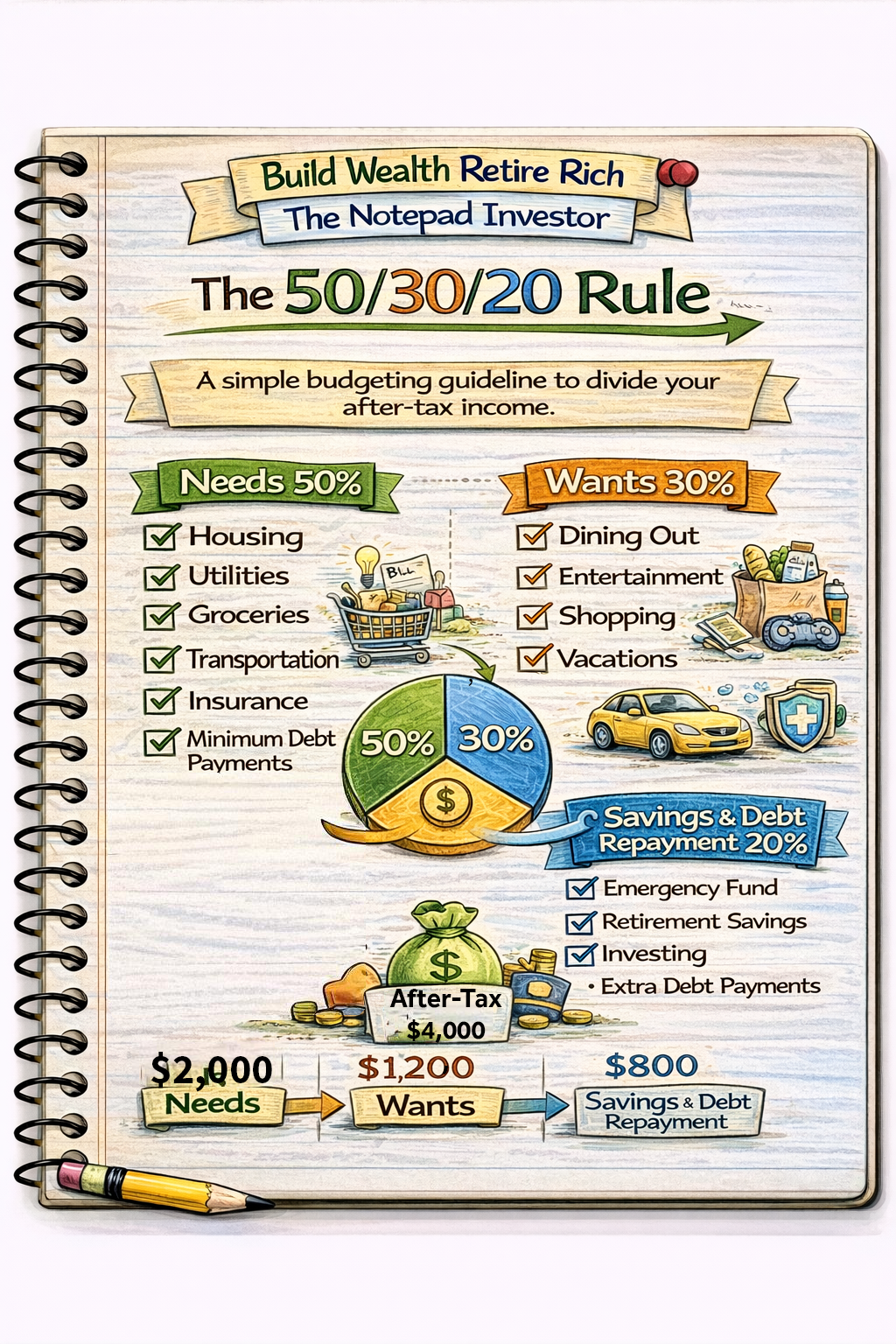
The 50/30/20 rule is a widely used budgeting guideline that divides income into three primary categories: needs, wants, and savings.
Under this framework, approximately 50 percent of income is allocated to essential needs such as housing, food, transportation, insurance, and utilities. These expenses represent the fundamental costs of maintaining daily life.
Thirty percent of income can be used for wants, which include discretionary spending such as entertainment, dining out, hobbies, travel, and other lifestyle choices. While these expenses are not strictly necessary, they contribute to quality of life.
The remaining twenty percent of income is directed toward savings and debt repayment. This portion helps individuals build emergency funds, invest for retirement, or reduce outstanding financial obligations.
The strength of the 50/30/20 rule lies in its simplicity. Instead of tracking every individual purchase, individuals can focus on maintaining balance across these three categories.
Although the percentages may vary depending on personal circumstances, the rule provides a useful starting point for building a structured financial plan.