Course Content
Foundations of Personal Finance
This module introduces the core principles of personal finance. You will learn how money flows through your life, how financial decisions affect your future, and why building strong financial habits early is critical. By the end of this section, you will understand the basic framework that supports budgeting, saving, investing, and long-term wealth building.
0/7
Budgeting and Cash Flow
This module focuses on building control over your day-to-day finances. You will learn how budgeting works, how to track spending, and how to manage your monthly cash flow effectively. By the end of this module, you will understand how to create a simple budgeting system that helps you live within your means while still saving and investing for the future.
0/10
Credit and Debt Management
Credit can be a powerful financial tool when used responsibly, but it can also become a major source of financial stress when mismanaged. This module explains how credit works, how debt accumulates, and how to create a strategy for reducing and eliminating high-interest debt. You will also learn how credit scores influence borrowing opportunities and financial costs.
Saving and Emergency Funds
Financial security begins with the ability to save consistently and prepare for unexpected expenses. In this module, you will learn how to build an emergency fund, develop saving habits, and protect yourself from financial shocks. These strategies form the foundation that allows individuals to move from financial stability toward wealth building.
0/5
Retirement Planning
Retirement planning focuses on preparing financially for the time when you are no longer dependent on employment income. In this module, you will learn how retirement savings grow over time, how to estimate future needs, and how consistent investing can support financial independence later in life.
Investing Basics
Investing allows your money to grow over time and plays a critical role in building long-term wealth. This module introduces the core principles of investing, including risk, return, diversification, and compound growth. You will learn how investing works and why starting early can significantly improve long-term financial outcomes.
The Complete Personal Finance Course

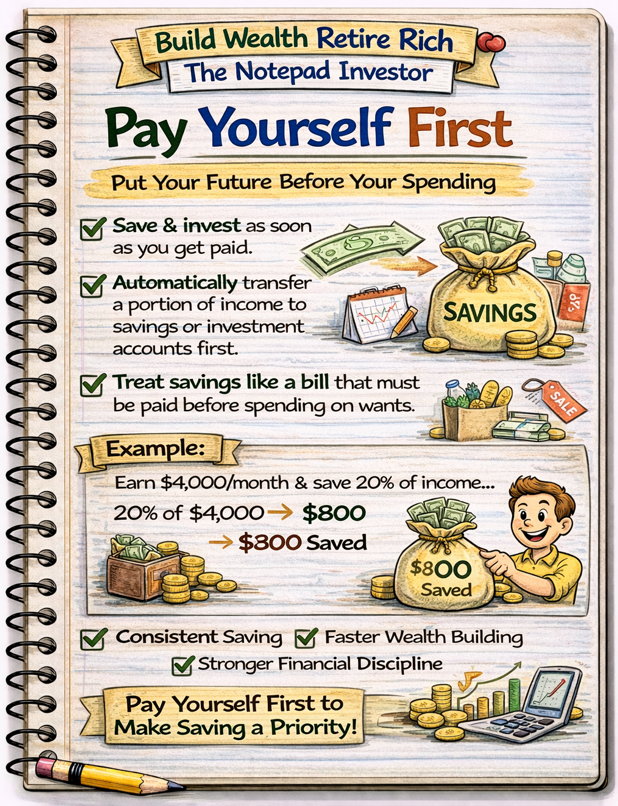
The principle of “pay yourself first” is one of the most effective strategies for building savings. This approach involves setting aside a portion of income for savings immediately when money is received, before paying for other expenses.

Many individuals attempt to save whatever money remains at the end of the month. However, in practice, this often results in little or no savings because most income has already been spent.

By paying yourself first, saving becomes a priority rather than an afterthought. When income is received, a predetermined portion is automatically transferred into a savings or investment account. The remaining income is then used for living expenses.

This strategy works because it establishes saving as a regular financial habit. Over time, individuals adjust their spending patterns to fit within the remaining income.

Automation can make this process even easier. Setting up automatic transfers to savings accounts ensures that the saving habit occurs consistently without requiring ongoing decisions.

The pay-yourself-first strategy transforms saving from something optional into a core part of financial management.

Scroll to Top