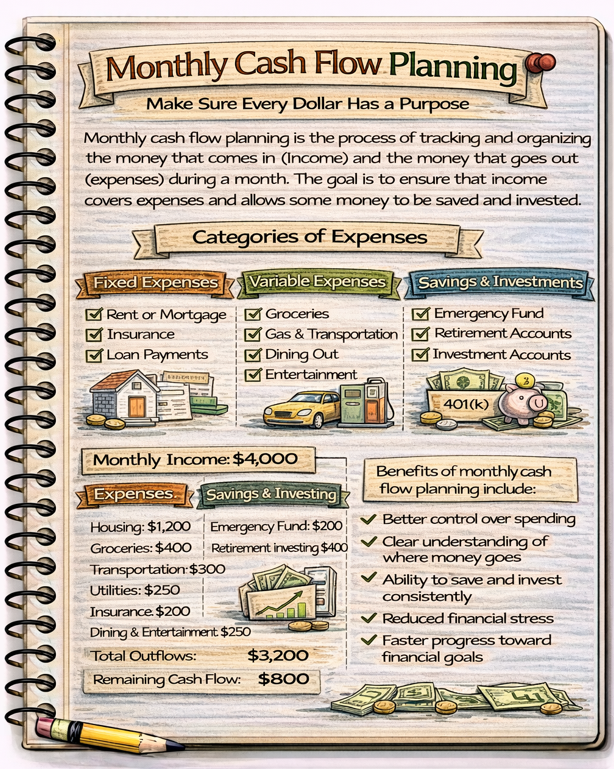
Cash flow describes the movement of money into and out of your financial life. Positive cash flow occurs when income is greater than expenses, while negative cash flow occurs when spending exceeds earnings.
Positive cash flow creates opportunities for saving and investing. When individuals consistently spend less than they earn, they can build emergency funds, pay off debt, and invest for the future.
Negative cash flow, on the other hand, often leads to financial stress. When expenses exceed income, individuals may rely on credit cards or loans to cover the gap. Over time, this can result in accumulating debt and increasing financial pressure.
Improving cash flow often involves both increasing income and managing expenses. Individuals may look for ways to increase earnings through career advancement, additional work opportunities, or investments. At the same time, reviewing spending habits can reveal unnecessary expenses that can be reduced.
Understanding cash flow helps individuals make informed financial decisions and maintain long-term financial stability.